
Course Finder
Not sure where to start? We'll help you find the right course.



All courses
Showing 23-33 of 248 courses
 HACCP
HACCP
Hazard Analysis Critical Control Point (HACCP) - Level 4 Training Course
Upon completion of the course, learners will acquire the skills to assist in implementation of HACCP system, critically evaluate HACCP plans and understand the importance of having an effective HACCP system in place.This training course is aimed at learners who are working at management level in food manufacturing/catering businesses, quality assurance staff or members of HACCP team.
 HACCP
HACCP
Hazard Analysis And Critical Control Points (HACCP) Level 3
Understand how to reduce the risk of food safety hazards with the introduction to Hazard Analysis & Critical Control Points (HACCP) training course from SGS.Hazard Analysis & Critical Control Points (HACCP) helps organizations to manage food safety hazards using a systematic preventive approach. This course will provide you with an introduction to HACCP and enable you to understand how it can help you to reduce the risk of food safety hazards in your business.
 Food
Food
FSPCA Preventive Controls For Human Food (PCQI) V2.0
The FSPCA training program serves as the basis for industry training offered by FSPCA trained lead instructors. The regulation requires that certain activities must be completed by a "preventive controls qualified individual" who has "successfully completed training in the development and application of risk-based preventive controls." This is the objective of FSPCA's standardized curriculum, which means the FSPCA participant course is one way to meet the requirements for a preventive controls qualified individual (PCQI). FSPCA not only developed the curriculum but was also responsible for establishing a cadre of lead instructors worldwide who could provide the training to food safety professionals for these individuals to become PCQIs. To provide evidence of this, FSPCA course participants receive a Course Certificate of Successful Completion issued only by FSPCA.The objective of the FSPCA's Preventive Controls for Human Foods curriculum update is to provide a better educational experience for the course participant. Version 2.0 will be a more dynamic curriculum1 with the updated information, especially the incorporation of FDA's guidance to foster the design of a better food safety plan. The updated curriculum will draw a clear linkage to HACCP while demonstrating its advantages by elevating specific aspects within sanitation, allergen control, and supplier control to the level of control of Process Preventive Controls/CCPs.Version 2.0 of the PCHF curriculum integrates information from the FDA's recently issued Hazard Analysis and Risk-Based Preventive Controls for Human Food draft guidance including updates to the hazard analysis course chapter which now includes use of the FDA’s Appendix 1- Known or Reasonably Foreseeable Hazards and updates to the allergen chapter which now includes sesame.This updated version of the course helps those who operate primarily under HACCP by improving the linkage between Preventive Controls and HACCP.
 Sustainability / ESG
Certificate Course on Environmental, Social, Governance(ESG) Fundamentals, Implementation and Reporting
The purpose of the course is to enhance awareness and understanding of what ESG is and associated criteria, whilst recognising the challenges of integration and implementation of ESG into organisational strategy. Further, the course also covers advancement of skills and knowledge towards the tools and techniques required, to implement and report on ESG material issues and their associated criteria.
 BRCGS
BRCGS
BRCGS: Global Standard for Food Safety Issue 9: Lead Auditor
This in-depth course will provide an understanding of the Standard in terms of the protocol, requirements and how to audit effectively. Delegates will gain an in-depth guide to the requirements of the Standard, and learn how to undertake a BRCGS audit, including effective planning, conducting and reporting of the audit. Auditing techniques will be practised and developed, to include the auditor competency skills required of Global Food Safety Initiative (GFSI) scheme auditors.Delegates must have a prior working knowledge of quality management systems and auditing within the relevant manufacturing sector, and also have completed a hazard analysis and critical control points (HACCP) course of at least two days' duration.At the end of the course you will be assessed with an exam. Successful completion of this course, including the exam, forms part of the training necessary to become a BRCGS auditor. The steps necessary to complete your training must be arranged with a BRCGS-approved certification body.
 ISO 14001 – Environment
ISO 14001:2026 Environmental Management Systems (EMS) Internal Auditor Training Course
The objective of this course is to provide learners with the knowledge and skills required to perform an internal audit of part of an Environmental Management System (EMS) based on ISO 14001:2026, report on the effective implementation and maintenance of the management system in accordance with ISO 19011 and to contribute to the continual improvement of the management system.The course refers to ISO 14001:2026 as the management system standard that provides the context for an internal audit. However, this course does not address ISO 14001:2026 in detail.PRIOR KNOWLEDGEBefore starting this course, learners are expected to have the following prior knowledge:-Management systems:understand the Plan-Do-Check-Act (PDCA) cycle;knowledge of environmental management systems (EMS) and the requirements of ISO 14001:2026.-Environmental management:the concept of environmental, sustainable development whereby an organisation must ensure that actions of today do not degrade the environment of the future;the purpose of an initial review as the basis for establishing an EMS where none currently exists;evaluation of activities, products and services to establish the environmental aspects associated with normal operating conditions, abnormal conditions such as start-up and shutdown and emergency situations and accidents;considerations of environmental aspects with respect to:emission to air, release to water and release to land;use of raw materials, natural resources and energy;energy emitted and lost e.g. heat, radiation, vibration, steam, and compressed air;public nuisance such as light pollution, noise, and odour.environmental legislation and how legal compliance forms part of an EMS;typical methods for evaluation of the significant impacts of the environmental aspects identified and how their ranking influences operational control and priorities for improvement.
 Sustainability / ESG
Reporting with the Global Reporting Initiative (GRI) Standards
Global Reporting Initiative (GRI) Standards is the most widely accepted ESG reporting framework. This interactive training course provides an in-depth understanding of GRI Standards, its principles, purpose, universal, sector and topics standards. This course also provides an insight on materiality assessment process of the GRI Standards. This two-day course consists of relevant activities and workshops to provide a hands-on experience to the participants of this training.SGS India is an Approved Training Partner for GRI Accredited Trainings.

FSSC 22000 V7 Internal Auditor Training Course
This course has been developed by SGS for the benefit of clients wishing to understand how to internally audit against FSSC 22000 and its requirements. In June 2026, the scheme was updated from version 6 to version 7.
 Personal Development & Soft Skills
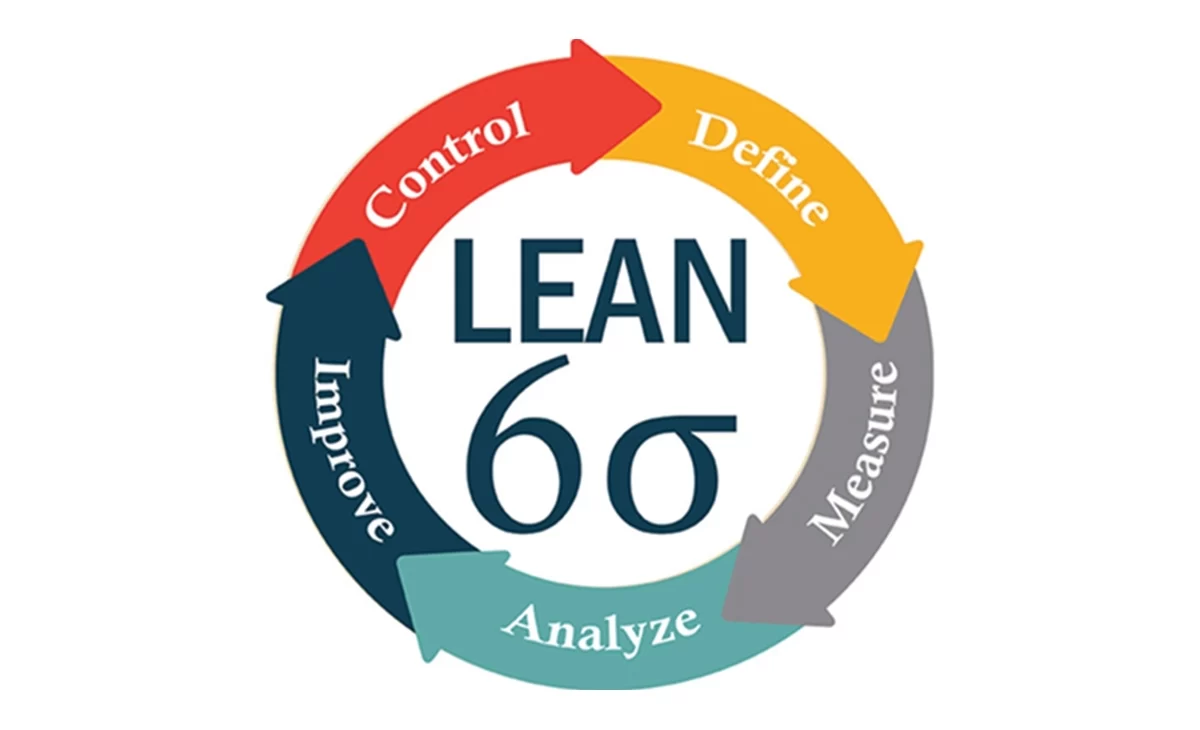
Lean Six Sigma Yellow Belt Training Course
The Six Sigma business management strategy aims to improve the quality of your process outputs by identifying and resolving the causes of defects and errors, as well as minimising variability in manufacturing and business processes. To help you apply and benefit from its approach, you need expert training. Our Six Sigma Yellow Belt training is designed to enable managers, section heads, engineers, supervisors, line leaders and subject matter experts to understand the main concepts and methodologies of the strategy.
 BRCGS
BRCGS
BRCGS : Product Safety Management - Internal Auditor Training Course
This two-day course will enable you to undertake internal audits and prepare companies for third party audits. It is delivered through a series of workshop-led discussions, presentations and an interactive case study. During the live case study, you will be given feedback and support to enable you to carry out an audit at your own workplace.

AS9100D Revision 2016 Aerospace Quality Management Systems Foundation Training Course
The objective of this course is to provide learners with the knowledge and skills required to understand the structure and intent of a Quality Management System based on AS9100D and report on the effective implementation and maintenance of the management system in accordance with ISO 19011 and to contribute to the continual improvement of the management system. The course refers to AS9100D as the Management System Standard that provides the context for internal audit in aerospace industry.
Ready to get started?
Gain nationally recognised safety credentials through intensive hands-on training with industry-leading instructors.