




All courses
Showing 12-22 of 338 courses
 Others
ISO 22301:2019 Business Continuity Management Systems Introduction Training Course (CVILT)
This course aims to provide learners who have an existing, basic knowledge of, or experience in, business continuity management with an understanding of the management systems approach and the requirements of ISO 22301, and to provide a basis for learners who wish to go on to complete CQI and IRCA Certified BCMS Auditor courses.
 ISO 9001 – Quality
ISO 9001:2015 Quality Management Systems Internal Auditor Training Course
The objective of this course is to provide learners with the knowledge and skills required to perform an internal audit of part of a quality management system based on ISO 9001:2015, report on the effective implementation and maintenance of the management system in accordance with ISO 19011:2018 and to contribute to the continual improvement of the management system.Prior Knowledge RequirementsBefore starting this course, learners are expected to have the following prior knowledge:Management SystemsThe Plan, Do, Check, Act (PDCA) cycleThe core elements of a management system and the interrelationship between top management responsibility, policy, objective, planning, implementation, measurement, review and continual improvement.Quality Management - The fundamental concepts and the seven quality management principles (see ISO 9001)Customer focusLeadershipEngagement of peopleProcess approachImprovementEvidence-based decision makingRelationship managementThe relationship between quality management and customer satisfactionISO 9001:2015Knowledge of the requirements of ISO 9001:2015 which may be gained by completing an Introduction Training Course or equivalent
 Health and Safety
Extra Low Voltage Electrical Training Course
This course will inform you of specific electrical standards and responsibilities that relate to authorisations to maintain, modify or install extra low voltage mobile and transportable electrical installations.On completion of this training course, you will have an understanding of:Auto electrical requirementsElectrical test equipment requirementsAustralian standards and legislationThe course covers the following topics:Legislation and compliance documentationVoltage definitionsElectric shockAuto electricalElectrical installation modificationsElectrical test equipment and maintenance
 Health and Safety
Provide First Aid and CPR Refresher
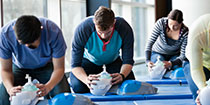
This First Aid and CPR refresher course is for those that hold a current first aid certificate only. This course is designed to refresh participants with up-to-date skills and knowledge required to provide first aid response, life support including how to perform cardiopulmonary resuscitation (CPR) on a person who is unconscious and not breathing normally in line with Australian Resuscitation Council (ARC) Guidelines and management of casualty(s) and the incident and other first aiders until the arrival of medical or other assistance.Course Content:DRSABCD action planManaging the unconscious breathing casualtyCardiopulmonary resuscitation (CPR) stepsDemonstration and use of an Automated External Defibrillator (AED)LegalrequirementsInfection controlChoking and airway obstructionFirst Aid kitsChest PainAsthmaAllergic reactions and AnaphylaxisShockWounds and non-life-threatening bleedingBurns and scaldsSafety and risk managementFractures, sprains, strains and dislocationsHead, neck and spinal injuriesEye injuriesHeat and cold induced illnessesPoisons and toxic substancesBites and stingsUnconsciousnessAssessment:This course includes the following competency-based assessments:A Pre-Course Theory AssessmentA Theory Assessment with multiple choice questionsPractical Assessment, with tasks including:Perform at least 2 minutes of uninterrupted single rescuer cardiopulmonary resuscitation (CPR) (5 cycles of both compressions and ventilations) on an adult resuscitation manikin placed on the floor.Perform at least 2 minutes of uninterrupted single rescuer CPR (5 cycles of both compressions and ventilations) on an infant resuscitation manikin placed on a firm surface.Follow the prompts of an automated external defibrillator (AED)Complete an injury reportRespond to the following first aid scenarios:non-life-threatening bleeding control and shockNose bleedAnaphylaxisEnvenomationFractures and dislocationsAsthmaChoking and airway obstruction
 Health and Safety
Provide First Aid and CPR
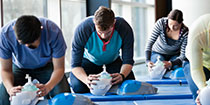
This course is designed to provide participants with the skills and knowledge required to provide first aid response, life support including how to perform cardiopulmonary resuscitation (CPR) on a person who is unconscious and not breathing normally in line with Australian Resuscitation Council (ARC) Guidelines and management of casualty(s) and the incident and other first aiders until the arrival of medical or other assistance.Course Content:DRSABCD action planManaging the unconscious breathing casualtyCardiopulmonary resuscitation (CPR) stepsDemonstration and use of an Automated External Defibrillator (AED)LegalrequirementsInfection controlChoking and airway obstructionFirst Aid kitsChest PainAsthmaAllergic reactions and AnaphylaxisShockWounds and non-life-threatening bleedingBurns and scaldsSafety and risk managementFractures, sprains, strains and dislocationsHead, neck and spinal injuriesEye injuriesHeat and cold induced illnessesPoisons and toxic substancesBites and stingsUnconsciousnessAssessment:This course includes the following competency-based assessments:A Pre-Course Theory AssessmentA Theory Assessment with multiple choice questionsPractical Assessment, with tasks including:Perform at least 2 minutes of uninterrupted single rescuer cardiopulmonary resuscitation (CPR) (5 cycles of both compressions and ventilations) on an adult resuscitation manikin placed on the floor.Perform at least 2 minutes of uninterrupted single rescuer CPR (5 cycles of both compressions and ventilations) on an infant resuscitation manikin placed on a firm surface.Follow the prompts of an automated external defibrillator (AED)Complete an injury reportRespond to the following first aid scenarios:non-life-threatening bleeding control and shockNose bleedAnaphylaxisEnvenomationFractures and dislocationsAsthmaChoking and airway obstruction
 Health and Safety
Low Voltage Electrical Training Course
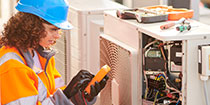
All electrical work, including repair, installation and alteration is to be undertaken strictly in accordance with the Work Health and Safety (Mines and Petroleum Sites) Regulation 2022 and associated Australian standards and site standards of engineering practice. This course will inform you of the specific standards and responsibilities that are relevant for authorisation as a low voltage electrical tradesperson in the mining industry.On completion of this training course, you will have an understanding of:Electrical tradesperson requirementsElectrical test and equipment requirementsAustralian standards and legislationThe course covers the following topics:Legislation and compliance documentationIP ratingsVoltage definitionsElectric shock protocolsPower restoration requirementsLighting plants, generators and welding machinesElectrical testing on energised low voltage equipmentAuto electrical equipmentElectrical installation modificationsPortable electrical equipmentElectrical test equipment and maintenanceArc flash and PPE requirements
 Health and Safety
HLTAID009 - Provide Cardiopulmonary Resuscitation
This course is designed to provide participants with the skills and knowledge required to perform cardiopulmonary resuscitation (CPR) on a person who is unconscious and not breathing normally in line with Australian Resuscitation Council (ARC) Guidelines.Course Content:DRSABCD action planManaging the unconscious breathing casualtyCardiopulmonary resuscitation (CPR) stepsPrinciples and legalities of CPRInfection controlDemonstration and use of an Automated External Defibrillator (AED)Hazards and risk managementAssessment:This course includes the following competency-based assessments:A Theory Assessment with multiple choice questionsPractical Assessment, with tasks including:Perform at least 2 minutes of uninterrupted single rescuer cardiopulmonary resuscitation (CPR) (5 cycles of both compressions and ventilations) on an adult resuscitation manikin placed on the floor.Perform at least 2 minutes of uninterrupted single rescuer CPR (5 cycles of both compressions and ventilations) on an infant resuscitation manikin placed on a firm surface.Follow the prompts of an automated external defibrillator (AED)Manage the unconscious breathing casualtyRespond appropriately in the event of regurgitating or vomiting
 HACCP
HACCP
HACCP Refresher Training Course
The purpose of this course is to refresh and provide updates on recent developments for HACCP, including Codex Alimentarius 2022 Guideline for HACCP. It also covers the five preliminary steps and seven principles of HACCP.
 Food
Food
FSSC 22000 V7 Food Safety System Certification Transition Training Course
This course has been developed by SGS for the benefit of clients wishing to understand the FSSC 22000 Certification Scheme and its requirements.On 1st May 2026 FSSC released an updated version from v6 to v7.This course aims to provide learners with an overview of the main changes from FSSC 22000 v6 to v7, including all major “new” and “enhanced” requirements, key process updates and changes to categories and subcategories.Course ContentIntroduction / Overview of FSSC 22000 V7 and the Core DriversMajor "New" and "Enhanced" RequirementsCategories and SubcategoriesKey Process Updates
 Health and Safety
Site Safety Supervisor Course (S123/G189)
This course is designed to provide participants with the skills and knowledge required to apply risk management processes, conduct work related health and safety investigations as a result of an incident and to contribute to a safe workplace and communicate in the workplace in the mining, drilling and civil infrastructure industry.Course Content:Apply risk management processPlan and prepare for risk managementIdentify and assess unacceptable riskIdentify and recommend risk controlsContribute to the implementation of risk controlsReview risk management documentationConduct safety and health investigationsDetermine the objectives and develop investigation planGather informationEvaluate informationIdentify courses of actionPrepare and present investigation reportsCommunicate informationPlan and prepare to communicate informationCommunicate information to achieve work activity outcomesDevelop and perform work activity presentationParticipate in resolving conflictsPlease note: Lunch is catered for this course. Please contact us if you have any dietary requirements.Assessment:A Theory Assessment with short answer questionsA Practical assessment that includes:Two workplace incident investigationsTwo Risk AssessmentsTwo Toolbox Talk/MeetingsConflict Management ScenariosUsing Electronic Communication Systems
 Health and Safety
RIIRIS402E - Carry out the Risk Management Process
This course is designed to provide participants with the skills and knowledge required to carry out risk management processes, including planning, identifying hazards and assessing risk, and developing and implementing risk controls.Course Content:Plan and prepare for implementing the risk management processIdentifying workplace hazardsAssessing workplace risks and Identifying unacceptable risk levelsIdentifying potential actions and developing risk controlsImplementing and evaluating risk controlsAuditing the risk management process and completing recordsPlease note: Lunch is catered for this course. Please contact us if you have any dietary requirements.Assessment:A Theory Assessment with short answer questionsA Practical assessment that includes:Planning and preparing for the risk management processTwo Risk AssessmentsTwo Risk Assessment AuditsUndertaking routine hazard identification and analysisA loss scenarioFacilitating the risk management process