Food Safety and Food Hygiene courses
Showing 1-11 of 19 courses
 Food Safety and Food Hygiene
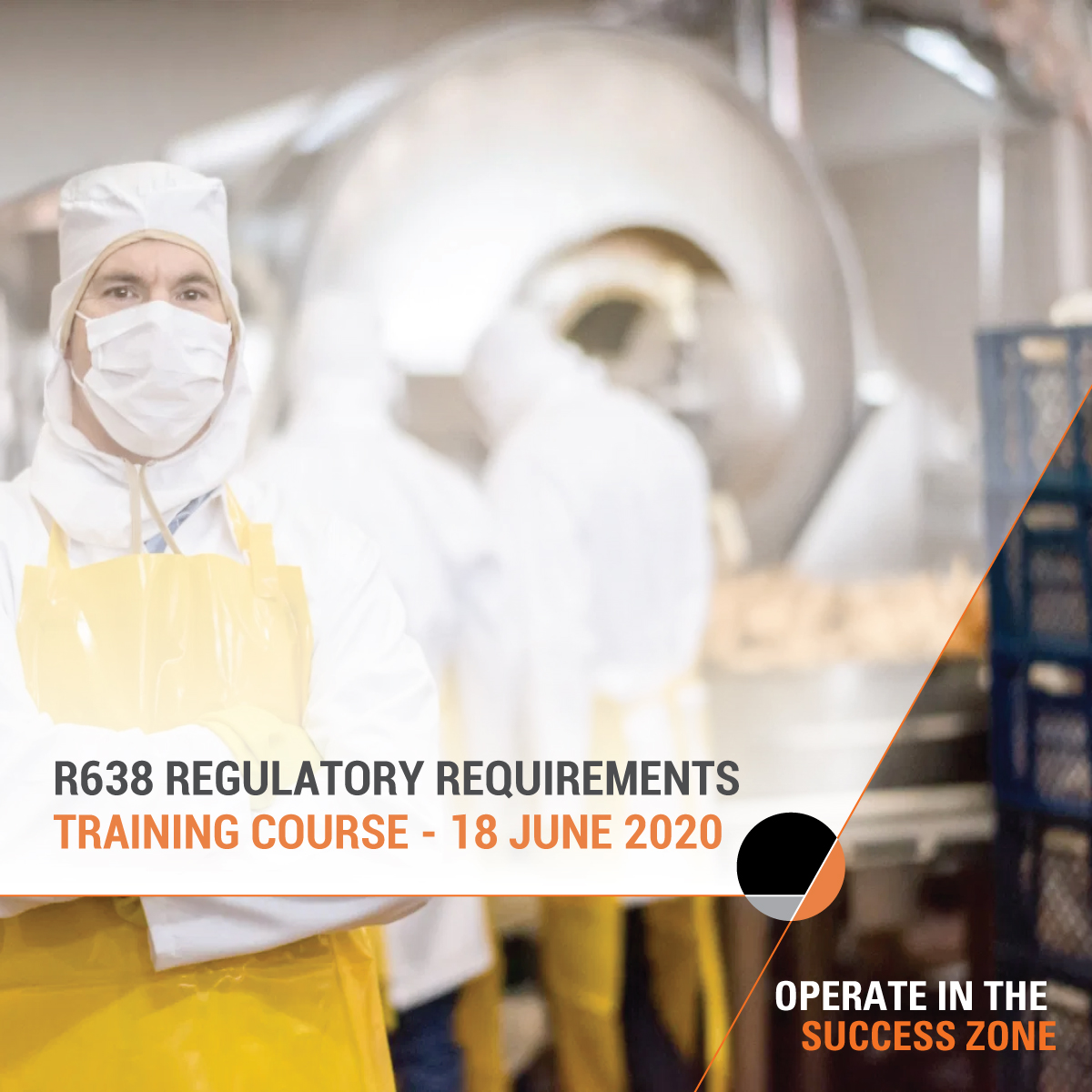
Regulation 638 of 2018 General Hygiene Requirements for Food Premises and the Transport of Food
This clause by clause training course will cover Regulatory 638 General Hygiene Requirements for food premises and transport of food. This course is designed to give an in-depth explanation into the practical understanding and implementation of this regulatory requirement within South Africa for a Food Premise.
 Food Safety and Food Hygiene
FSMA Food Safety Hygiene Practices Training Course
This course aims to help learners gain an overview of the key elements of FSMA food hygiene and preventive control requirements related to food facility personnel. The course will also help learners understand the requirements for maintaining a working environment that minimises risk and ensures effective food hygiene practices.
 Food Safety and Food Hygiene
Food Safety Allergen Management Training Course
Managing food allergies is crucial for consumer health, and the food industry plays a pivotal role in ensuring safety. Allergen Management systems are designed to help food businesses identify, control, and communicate potential allergens in their products. Allergen Management is a documented system that food businesses need to develop to:identify and control food allergens in their recipes;train employees on handling allergenic ingredients; and communicate the risk and presence of food allergens in meals to customers.This course aims to familiarise you with the fundamentals of food allergen management and the importance of labelling and allergen information.
Food Safety and Food Hygiene
Food Loss and Waste Training Course
Food loss and waste refers to the significant amount of food that is lost or discarded at various stages of the food supply chain, from production and processing to distribution and consumption. This is a complex issue that has social, economic and environmental implications.In South Africa, it is estimated that about 10 million tonnes of food is wasted each year; in a country where many people go to bed many days without a proper mealThis course aims to familiarise you with the fundamentals of food loss and waste management.
Food Safety and Food Hygiene
Food Safety Equipment Management Training Course
Food Safety Equipment Management is a strategic and systematic approach to identifying, preventing, and minimizing cross-contamination and other foodborne hazards. It provides a basis for the effective management of an organisation’s food safety responsibilities. The fundamental goal of an organisation is to ensure that food production and provision is safe and of a sufficiently high quality.This course aims to familiarise you with the fundamentals of food safety equipment management.
 Food
Food
FSSC 22000 v7 Transition Training Course
This course has been developed by SGS for the benefit of clients wishing to understand the FSSC 22000 Certification Scheme and its requirements. On 1st May 2026 FSSC released an updated version from v6 to v7. This course aims to provide learners with an overview of the main changes from FSSC 22000 v6 to v7, including all major “new” and “enhanced” requirements, key process updates and changes to categories and subcategories.Prior KnowledgePrior to attending this training course, learners should have a good understanding of their food safety management system documents related to the requirements of the scheme.Course CertificationOn completion of this course learners will be issued with a “Certificate of Attendance”.
 Food
Food
FSSC 22000 v7 Introduction Training Course
This course has been developed by SGS for the benefit of clients wishing to understand the FSSC 22000 Certification Scheme and its requirements. In May 2026, the scheme was substantially updated from version 6 (v6) to version 7 (v7).This course aims to assist organisations and individuals to understand the new and updated requirements under FSSC 22000 v7 and ISO 22003:2022, identifying and reviewing the specific requirements for Food Fraud Mitigation Food Defense and Food Safety Culture.Prior KnowledgePrior to attending this training course, learners should have (but not essential) sufficient knowledge of the following food safety management principles and concepts: Implementing or operating a management system within a food sector context. This includes schemes such as FSSC 22000, ISO 22000 and/or other schemes which include management system components.Knowledge of prerequisite programs (PRPs) as specified in ISO 22002-1.The principles of HACCP as defined by Codex Alimentarius Commission.Course CertificationOn completion of this course, learners will be issued with a “Certificate of Attendance”.
 Food
Food
FSSC 22000 Version 7 (FSMS) Internal Auditor Training Course
This course has been developed by SGS for the benefit of learners wishing to understand how to internally audit against FSSC 22000 and its requirements. In May 2026, the scheme was updated from Version 6 to Version 7. This training provides learners with the knowledge and skills required to perform an internal audit of part of a FSMS against FSSC 22000 v7 and ISO 22000:2018, in accordance with ISO 19011:2026, ISO 22002-1:2025, as applicable and contribute to the continual improvement of the management system.Prior KnowledgeThis course is designed ideally for experienced food safety professionals with an understanding of the management systems approach to food safety. Prior to attending this training course, learners should have, but it is not essential, sufficient knowledge of the following food safety management principles and concepts to ensure that this training is as beneficial as possible.Management principles and concepts:- Plan-Do-Check-Act (PDCA) cycleFood safety management concepts, including:- HACCP Principles- Hazard analysis- Hazard and risk assessment, and management etc.- The relationship between food safety management, customer satisfaction and customer food safety requirements.Commonly used food safety management terms and definitions, as given in ISO 22000:2018 and FSSC v7.FSSC version 7 and ISO 22000:2018:- The requirements of FSSC version 7 and ISO 22000:2018 which may be gained by completing a Foundation Training course or equivalent.Course CertificationOn completion of this course learners will be issued with a “Certificate of Attendance”.
 Food
Food
FSSC 22000 Version 7 (FSMS) Implementation Training Course
This course aims to provide learners who have an existing, basic knowledge of the Food Safety Management System (FSMS), with an understanding of the management systems approach and related requirements, and to provide a basis for learners who wish to implement an FSMS. The FSMS discussed in this course is based on the requirements of the FSSC 22000 Certification Scheme. In May 2026, the scheme was updated from Version 6 to Version 7.Prior KnowledgeManagement System based on the process approach that incorporates the Plan-Do-Check-Act (PDCA) cycle and risk-based thinking.The core elements of a management system and the interrelationship between management responsibility and commitment, policy, planning, implementation, measurement, review and continual improvement.The framework of the Food Safety Management System:- HACCP Principles- ISO 22000:2018 Food Safety Management System- Prerequisite Programmes (PRPs)Course CertificationOn completion of this course learners will be issued with a “Certificate of Attendance”.
 Food
Food
FSMA 204 Traceability Final Rule - Introduction and Implementation Training Course (CVILT)
This training aims to introduce and familiarise you with the requirements of FSMA 204 Traceability Final Rule.PRIOR KNOWLEDGEIt will benefit if you have knowledge of FSMA and general food safety requirements.COURSE CERTIFICATEOn completion of this course you will be issued with a “Certificate of Attendance”.
 Food
Food
Food Defence Awareness Training Course (inc. TACCP) (CVILT)
This highly participative training course provides an introduction and overview of Food Defence and explores guidelines, legal requirements and standards in use alongside GFSI expectations. The course explores authenticity plans to help map your supply chain and the importance of Food Defence plans.