All courses
Showing 12-22 of 338 courses
 Health and Safety
Enter and Work in Confined Spaces Refresher
This course is designed to provide participants with refreshed and updated skills and knowledge required for entering and working in confined spaces in the resources and infrastructure industries. It includes planning and preparing for entry, work and exiting confined spaces including working in accordance with an issued permit, Standby duties, gas monitoring and the issuing of permits.
 ISO 9001 – Quality
ISO/FDIS 9001:2026 Quality Management Systems Introduction Training Course
This course has been developed in alignment with the ISO/FDIS 9001:2026 standard and may be subject to editorial updates. Learners attending an SGS ISO/FDIS 9001:2026 course will be notified of any changes upon the official publication of ISO 9001:2026.The purpose of this course is to provide learners with an understanding of the concept of Quality Management Systems and provides an overview of the purpose and requirements of ISO/FDIS 9001:2026 as a tool for business improvement.Course ContentIntroduction to the ISO 9000 Series of Management Systems StandardsISO/FDIS 9001:2026 Overview and Clauses 4 - 6ISO/FDIS 9001:2026 – Clause 7ISO/FDIS 9001:2026 – Clause 8ISO/FDIS 9001:2026 – Clauses 9 - 10
 Health and Safety
Enter and Work in Confined Spaces - 2 Day Course
DescriptionThis course is designed to provide participants with the skills and knowledge required for entering and working in confined spaces in the resources and infrastructure industries. It includes planning and preparing for entry, work and exiting confined spaces including working in accordance with an issued permit, Standby duties, gas monitoring and the issuing of permits.Course Content:Legislation, standards, codes of practice and proceduresAssessing, entering, working and exiting confined spacesStandby dutiesSignageLock, tag out and isolation proceduresPurging and ventilationIssuing and working in accordance with a permitEquipment used in or near confined spacesHazard analysis, risk assessment and risk controlsProcedures for atmospheric monitoringUnderstanding and use of gas monitoring equipmentMaintenance of gas monitoring equipmentUse of ropes and knotsAssessment:A Theory Assessment with multiple choice and short answer questionsPractical Assessments, with tasks including:Pre-Start equipment inspectionsCompleting personal risk assessment documentation such as Take 5's and JSA'sTaking part in two (2) simulated confined space entries under supervision and instructionIssuing and observing work permits as part of the above Confined space entries
 Health and Safety
CPCWHS1001 - Prepare to Work Safely in the Construction Industry
This course is designed to raise awareness of best and safe practices to eliminate risks that cause injuries and fatalities at construction sites. This unit of competency specifies the mandatory work health and safety training required prior to undertaking construction work.Course Content:Identify health and safety legislative requirements of construction workIdentify construction hazards and risk control measuresIdentify health and safety communication and reporting processesIdentify incident and emergency response proceduresOn completion of this training course, you will:Gain personal awareness and knowledge of health and safety legislative requirements in order to work safely and prevent injury or harm to self and othersLearn how to identify and orally report common construction hazardsUnderstand basic risk control measuresBe able to identify procedures for responding to potential incidents and emergenciesUnderstand correct selection and fitting of common personal protective equipment (PPE) used for construction workAssessment:This course includes the following assessments:A Theory Assessment with multiple choice and short answer questionsPractical Assessments, including:Verbal question and answersCompleting a formCorrect fitting of personal protective equipment (PPE)
 Health and Safety
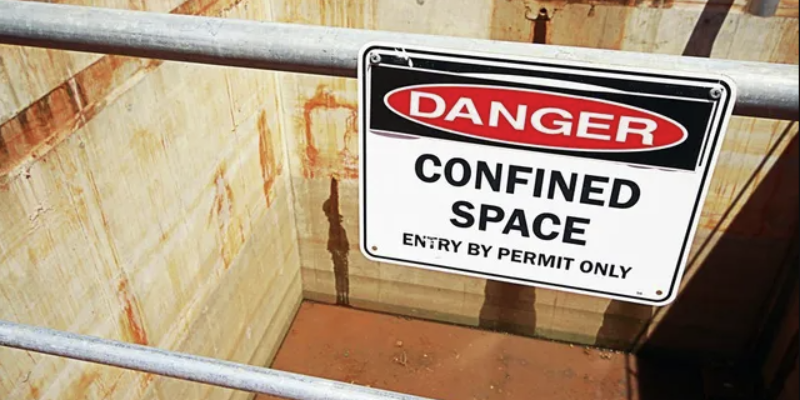
Enter and Work in Confined Spaces Advanced Refresher
This course is designed to provide participants with refreshed and updated skills and knowledge required for entering and working in confined spaces in the resources and infrastructure industries. It includes planning and preparing for entry, work and exiting confined spaces including working in accordance with an issued permit, standby duties, gas monitoring, issuing of permits, the use of breathing apparatus and confined spaces rescue.Course Content:Legislation, standards, codes of practice and proceduresAssessing, entering, working and exiting confined spacesStandby dutiesSignageLock, tag out and isolation proceduresPurging and ventilationIssuing and working in accordance with a permitEquipment used in or near confined spacesHazard analysis, risk assessment and risk controlsProcedures for atmospheric monitoringUnderstanding and use of gas monitoring equipmentMaintenance of gas monitoring equipmentUse of ropes and knotsSelection, use and maintenance of respiratory devicesResponding to an emergency situationAssessment:A Theory Assessment with multiple choice and short answer questionsPractical Assessments, with tasks including:Pre-Start equipment inspectionsCompleting personal risk assessment documentation such as Take 5's and JSA'sTaking part in two (2) simulated confined space entries under supervision and instructionIssuing and observing work permits as part of the above Confined space entriesUsing breathing apparatus to meet operational requirementsRescuing a person from a confined space
 BRCGS
BRCGS
BRCGS - Environmental Monitoring
This course will provide participants with an understanding of the key components of an environmental monitoring programme to identify potential microbiological risks in production and open product areas; in addition to explaining different sampling methods and key elements of a corrective action procedure. This is particularly useful when implementing an environmental monitoring programme based on the Global Standard for Food Safety Issue 8 requirements and industry best practices.
 Health and Safety
Provide First Aid and CPR Refresher
This First Aid and CPR refresher course is for those that hold a current first aid certificate only. This course is designed to refresh participants with up-to-date skills and knowledge required to provide first aid response, life support including how to perform cardiopulmonary resuscitation (CPR) on a person who is unconscious and not breathing normally in line with Australian Resuscitation Council (ARC) Guidelines and management of casualty(s) and the incident and other first aiders until the arrival of medical or other assistance.Course Content:DRSABCD action planManaging the unconscious breathing casualtyCardiopulmonary resuscitation (CPR) stepsDemonstration and use of an Automated External Defibrillator (AED)LegalrequirementsInfection controlChoking and airway obstructionFirst Aid kitsChest PainAsthmaAllergic reactions and AnaphylaxisShockWounds and non-life-threatening bleedingBurns and scaldsSafety and risk managementFractures, sprains, strains and dislocationsHead, neck and spinal injuriesEye injuriesHeat and cold induced illnessesPoisons and toxic substancesBites and stingsUnconsciousnessAssessment:This course includes the following competency-based assessments:A Pre-Course Theory AssessmentA Theory Assessment with multiple choice questionsPractical Assessment, with tasks including:Perform at least 2 minutes of uninterrupted single rescuer cardiopulmonary resuscitation (CPR) (5 cycles of both compressions and ventilations) on an adult resuscitation manikin placed on the floor.Perform at least 2 minutes of uninterrupted single rescuer CPR (5 cycles of both compressions and ventilations) on an infant resuscitation manikin placed on a firm surface.Follow the prompts of an automated external defibrillator (AED)Complete an injury reportRespond to the following first aid scenarios:non-life-threatening bleeding control and shockNose bleedAnaphylaxisEnvenomationFractures and dislocationsAsthmaChoking and airway obstruction
 Health and Safety
Provide First Aid and CPR
This course is designed to provide participants with the skills and knowledge required to provide first aid response, life support including how to perform cardiopulmonary resuscitation (CPR) on a person who is unconscious and not breathing normally in line with Australian Resuscitation Council (ARC) Guidelines and management of casualty(s) and the incident and other first aiders until the arrival of medical or other assistance.Course Content:DRSABCD action planManaging the unconscious breathing casualtyCardiopulmonary resuscitation (CPR) stepsDemonstration and use of an Automated External Defibrillator (AED)LegalrequirementsInfection controlChoking and airway obstructionFirst Aid kitsChest PainAsthmaAllergic reactions and AnaphylaxisShockWounds and non-life-threatening bleedingBurns and scaldsSafety and risk managementFractures, sprains, strains and dislocationsHead, neck and spinal injuriesEye injuriesHeat and cold induced illnessesPoisons and toxic substancesBites and stingsUnconsciousnessAssessment:This course includes the following competency-based assessments:A Pre-Course Theory AssessmentA Theory Assessment with multiple choice questionsPractical Assessment, with tasks including:Perform at least 2 minutes of uninterrupted single rescuer cardiopulmonary resuscitation (CPR) (5 cycles of both compressions and ventilations) on an adult resuscitation manikin placed on the floor.Perform at least 2 minutes of uninterrupted single rescuer CPR (5 cycles of both compressions and ventilations) on an infant resuscitation manikin placed on a firm surface.Follow the prompts of an automated external defibrillator (AED)Complete an injury reportRespond to the following first aid scenarios:non-life-threatening bleeding control and shockNose bleedAnaphylaxisEnvenomationFractures and dislocationsAsthmaChoking and airway obstruction
 Health and Safety
HLTAID009 - Provide Cardiopulmonary Resuscitation
This course is designed to provide participants with the skills and knowledge required to perform cardiopulmonary resuscitation (CPR) on a person who is unconscious and not breathing normally in line with Australian Resuscitation Council (ARC) Guidelines.Course Content:DRSABCD action planManaging the unconscious breathing casualtyCardiopulmonary resuscitation (CPR) stepsPrinciples and legalities of CPRInfection controlDemonstration and use of an Automated External Defibrillator (AED)Hazards and risk managementAssessment:This course includes the following competency-based assessments:A Theory Assessment with multiple choice questionsPractical Assessment, with tasks including:Perform at least 2 minutes of uninterrupted single rescuer cardiopulmonary resuscitation (CPR) (5 cycles of both compressions and ventilations) on an adult resuscitation manikin placed on the floor.Perform at least 2 minutes of uninterrupted single rescuer CPR (5 cycles of both compressions and ventilations) on an infant resuscitation manikin placed on a firm surface.Follow the prompts of an automated external defibrillator (AED)Manage the unconscious breathing casualtyRespond appropriately in the event of regurgitating or vomiting
 Digital Trust
ISO/IEC 27001:2022 Information Security Management Systems Auditor / Lead Auditor Training Course (CVILT)
DescriptionThe objective of this course is to provide you with the knowledge and skills required to perform first, second and third-party audits of Information Security Management Systems (ISMS) against ISO/IEC 27001:2022 (with ISO/IEC 27002), in accordance with ISO 19011 and ISO/IEC 17021, as applicable.IRCA AccreditationWe are accredited by the International Register of Certified Auditors (IRCA) globally. This course is accredited by IRCA, reference number 2549 - PR 373.
 Food
Food
FSMA 204 Traceability Final Rule - Introduction and Implementation Training Course (CVILT)
This training aims to introduce and familiarise you with the requirements of FSMA 204 Traceability Final Rule.PRIOR KNOWLEDGEIt will benefit if you have knowledge of FSMA and general food safety requirements.COURSE CERTIFICATEOn completion of this course you will be issued with a “Certificate of Attendance”.