All courses
Showing 56-66 of 284 courses

ISO 22000:2018 FSMS Internal Auditor based on ISO 19011
The course will also prepare the delegates to conduct the internal audit to ensure documentation and implementation compliance with the latest ISO 22000:2018 Food Safety Management System (FSMS) requirements.In general, the ISO 22000:2018 covers the following requirements:ISO 22000:2018 International Standard requirementsHACCP Codex, CAC/RCP 1-1969, rev 4-2003 GuidelinePre-requisite Programmes such as GMP or other applicable Pre-Requisite ProgrammesImportant: Only the softcopy of the course material will be distributed on the day of training. Thus participants are reminded to bring along their laptop for the duration of the training.
Introduction to Food Safety Culture
The purpose of this course is to equip learners with the knowledge and understanding of Food Safety Culture and its shared values, beliefs and norms that affect mindset and behaviour towards food safety in, across and throughout an organisation.

Implementing Corporate Liability Controls and Best Practices (for Sect 17A of MACC Act)
Reasonable and proportionate measures is needed to ensure business do not participate in corrupt activities. This measure commonly take in the form of policies and procedures.In the event that an organization is found liable under Section 17A of the MACC Act, this provision provides that the organization having ‘adequate procedures’ can raise it as a defence against corporate liability.Therefore, organization needs to develop suitable controls and practices to be used to protect organization and top management from these liabilities.
ISO 22002-4 & ISO 22002-100 PRPs Implementation Training for Food Packaging Industry
Food safety management systems require that the organization establishes PRPs to control the likelihood of introducing contamination through the work environment. Prerequisite programs (PRP) are programs and practices put in place to address the role the production environment plays in producing safe food/packaging products. In July 2025, new series of ISO 22002-X published, which includes part 4 (packaging), part 100 (food, feed, packaging) supply chain. This training is designed to equip participants with a clear and practical understanding & implementation of the updated ISO 22002-x:2025 requirements and how they apply within food packaging operation. Participants will learn how to interpret the standard, implement compliant PRPs, maintain effective controls, and demonstrate conformance during audits.
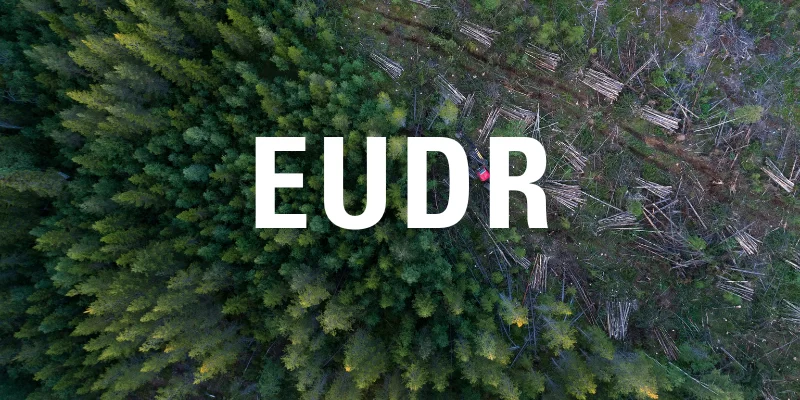
EU Deforestation Regulation (EUDR) Training
The European Union Deforestation Regulation (EUDR), formally known as Regulation (EU) 2023/1115, represents a significant legislative effort by the European Union to tackle the global challenges of deforestation and forest degradation.

FSMA Food Hygiene Practices

Understanding MS 1480:2019 & MS 1514:2022 Requirements
The second revision of MS 1480:2019 Food Safety According to Hazard Analysis and Critical Control Point (HACCP) System describes the requirements to ensure food safety during preparation, processing, manufacturing, packaging, storage, transportation, distribution, handling or offering for sale or supply in any sector of the food chain.On 1st June 2022, the Standards Malaysia published the second revision of MS 1514:2022 Good Manufacturing Practices for Food (GMP). MS 1514:2022 is the Pre-requisite Programmes to MS 1480:2019 Food Safety Standard. This standard cancel and replaces MS 1514:2009. Two year transition period will start from the date 13th July 2022. All accredited certified facilities are required to be transitioned to the new standard by 13th July 2024.This course provides an update of all the key requirements of MS 1480:2019 and MS 1514:2022 with examples of how the standard may be applied in the food manufacturing sectors.

ISO 9001:2015 Foundation
The adoption of a quality management system (QMS) is a strategic decision where organization demonstrate its ability to consistently provide product that meets customer and applicable statutory and regulatory requirements, and aims to enhance customer satisfaction through the effective application of the system, including a more risk-based approach in managing the processes, continual improvement of the system and the assurance of conformity to customer and applicable statutory and regulatory requirements.All requirements of ISO 9001 are generic and are intended to be applicable to all organizations, regardless of type, size and product provided. However, a good understanding and interpretation of the requirements are vital to ensure full conformance and enable certification to be obtained and maintained effectively.The aim of this course is to provide students who have an existing, basic knowledge of, or experience in, quality management with an understanding of the management systems approach and the requirements of ISO 9001, and to provide a basis for students who wish to go on to complete IRCA certified QMS Auditor Training courses.Important: Only the softcopy of the course material will be distributed on the day of training. Thus participants are reminded to bring along their laptop for the duration of the training.

Hazardous Chemical Management
Everyone works with all kinds of commercially prepared substances or chemicals and rarely do we consciously expose ourselves to substances that are hazardous. We naively believe that as long as the substance is in a sealed container, it won’t hurt the environment or us. But substances do not just sit there, they have to be handled, stored, processed and residuals have to be disposed of.These activities can and do expose us and the environment to potential risk. The better we understand the potential risk, the more effectively it can be managed to prevent pollution, prevent personal harm and ill-health arising from substances hazardous to health and the environment. This program will be an added advantage for ISO 14001 and OHSAS 18001 certified companies.ContentHazardous Material OverviewRoute of chemical Entry Into Our BodyUnderstanding of Various Chemical Labels as per CLASS Reg. 2013“Right to Know Policy”Chemical Safety Data Sheet Vs Safety Data SheetManaging Hazardous Chemical at WorkplaceHealth Effect of Hazardous ChemicalHierarchy of Chemical Risk ControlUnderstanding of Hazardous Chemical Spill and Clean Up Procedure
Foundation of ISO 9001:2026
ISO 9001:2026 helps enterprises across the world by reducing inefficiencies and improving processes, maintain consistent delivery, even as the business grows. It also builds credibility with customers and partners, unlock new contracts and access market opportunities. It shows a clear, consistent commitment to quality.This standard provides a structured yet flexible framework that can be implemented and upgraded progressively as the business grows. It helps streamline operations and improve efficiency without adding unnecessary complexity.
